• Eleanor Platt

    American Sculptor

    1910-1974

    "I have aimed high in art and given very completely of myself."

  • Biography

    Overview

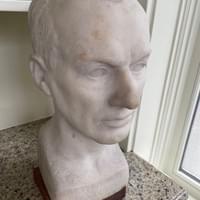
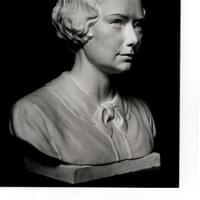
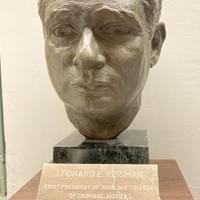
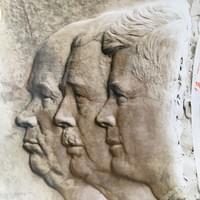
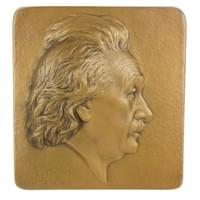
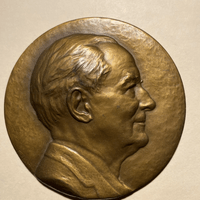
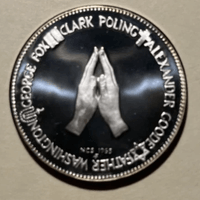
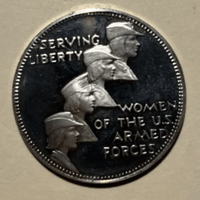
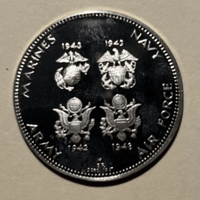
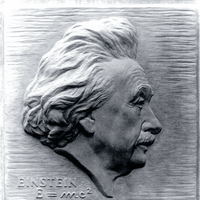
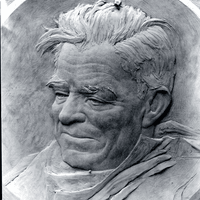
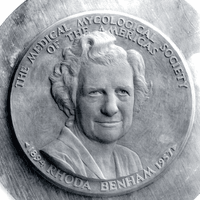
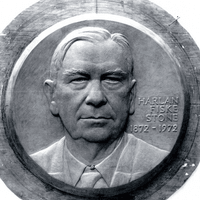
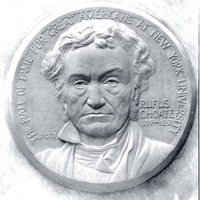
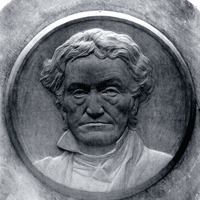
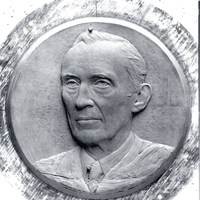
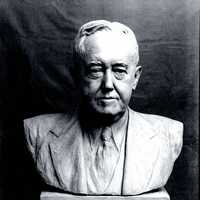
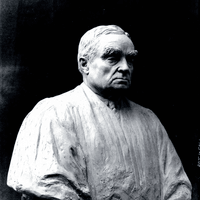
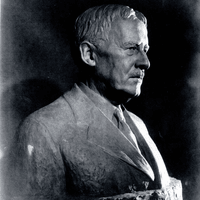
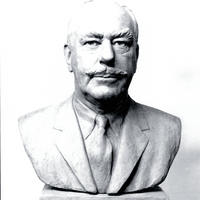
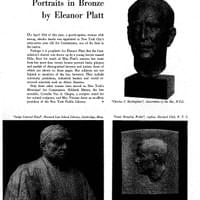
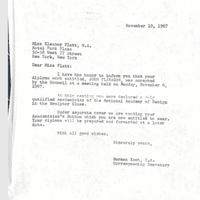
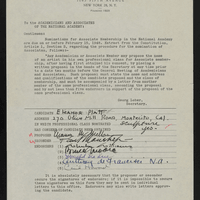
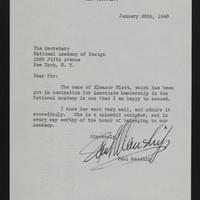
    Eleanor Platt was one of the foremost classical American sculptors of the 20th Century. Her works are installed in the Metropolitan Museum of Art, the National Portrait Gallery, the Hall of Great Americans at New York University, the United States Supreme Court, Harvard University, Cal Tech, and many other museums, universities, government buildings, and private collections throughout the country. Eleanor was a portraitist, sculpting busts, reliefs, and commemorative medals of many important historical figures of the 19th and 20th centuries. Her works included many prominent legal, scientific, and intellectual leaders . Throughout her prolific career she sculpted over 30 busts, 16 reliefs, and 32 medals, many of which were reproduced for museums, institutions, and private collectors. She also served in several important positions within the arts community.

    Sculpting was Eleanor's primary career. In her early years she supplimented her income with other employment but eventually made a fully independent living from her art. This was especially impressive considering she graduated from art school amid the Great Depression and developed her career in an era when single women were rarely professionally self-employed. She quickly made a name for herself with her early works of Justice Learned Hand, artist John Flanagan, and artist Arthur Lee. Her career spanned almost five decades and included occasional teaching, education, travel, and lectures.

    Eleanor reluctantly acted as her own business agent negotiating all aspects of her work including materials, contracts, casting, coloring, photography, shipping arrangements, and communications with her customers. All of her work was done on commission, she was not represented by an agent or gallery. Correspondences reveal she was not interested in, or felt it was in her nature, to negotiate business terms. This was a skill she had to aquire in order to network and obtain work. In one case she reluctantly turned down a commission to sculpt a bust of Sidney Lanier for the Hall of Great Americans because the contract price would not cover her expenses. At a later time she did sculpt the Lillian Wald bust for the Hall of Great Americans at an improved commission price. It was sometimes hard for clients to understand the commitment of time she needed in order to sculpt a portrait, during which her commission was her sole income. Portrait busts could take anywhere between six and twelve months to complete.

    During her first marraige to Charles J. Flavin in 1944, she lived for some years in California, which posed some production challenges as she could not find a bronze foundry on the west coast that she felt was up to her standards, and as a result she had to ship models back to New York for casting. She did other work while in California including some unknown ceramics. She worked in a lab of some kind perhaps touching up and coloring photographs, a side line of work she considered at one point to augment her sculpting income. While in California she lived in Santa Barbara, San Francisco, and Montecito. During these years it appears she traveled back to New York on occasion to work on commissions, renting temporary hotel apartments in the city as live-in studios.

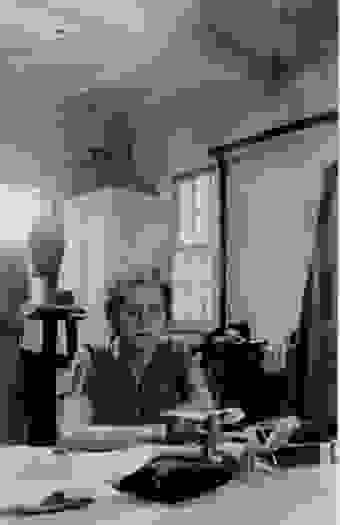
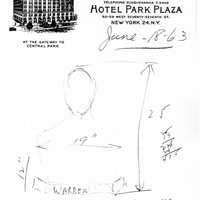
    Eleanor eventually realized moving to the west coast had slowed her career, and she divorced and move back east to live again in New York City. She married Victor Russo and they lived together until his death in 1957. After Russo's passing she kept her own art studio/apartment in Manhattan, beginning in 1959, at the Hotel Park Plaza for the remainder of her life. She refused to leave even as the neighborhood and building declined because she said she loved the natural light in her studio.

    Early years and background

    Eleanor Platt was born in Woodbridge, New Jersey, May 6th, 1910 to George Gilbert Platt Jr. and Eva (Smith) Platt. Eleanor had three older siblings: Howard, Florence, and Lester. Being the youngest child earned her the family nickname Babe, which stayed with her throughout her family life. Eleanor's grandfather, Luther S. Smith, went to work at the age of 22 for Thomas J. Edison in Menlo Park, New Jersey as his Carbonizer in the Edison factory. Eleanor's Great Grandmother claims to have seen one of the first lightbulbs produced at Edison's factory. After Edison moved his factory, Luther went on to join his father-in-law in construction eventually building wings at the National History Museum in NYC, additions at Columbia University, and other notable buildings. Eleanor traveled early in her career to Trinidad, the West Indies, Yucatan, and Central America to explore different art forms. Her hobbies included reading, music, and visiting galleries and museums.

    Education

    Eleanor studied classical sculpture exclusively with the distinguished Norwegian-born sculptor Arthur Lee and Edward McCarten, from 1929 to 1933 at the Art Students League of New York. In 1934 she finished her formal education at the Continuation School in New York City. She also studied at the New York Central Art School. In 1940 she received the Chaloner Prize, and in 1944 she was granted $1,000 from the American Academy of Arts and Letters. In 1945 she was named a Guggenheim Fellow and studied the problems associated with sculpting reliefs and plaques.

    Work Associations

    Early in her carreer she developed a strong friendship with the prominant attorney, Charles Culp Burlingham, who helped her network and procure commissions within the higher judiciary community. They were very close friends despite being from different generations and backrounds. She referred to him as "Uncle Charles" in correspondences, and their friendship spanned many years with Mr. Burlingham actively promoting Eleanor's art to friends, colleagues, and institutions.

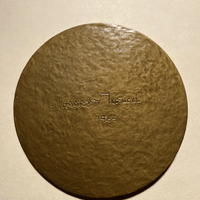
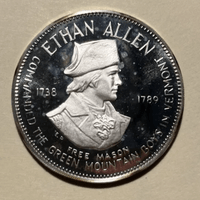
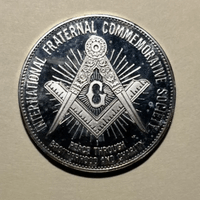
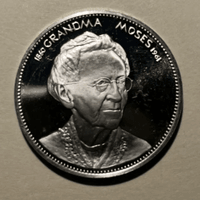
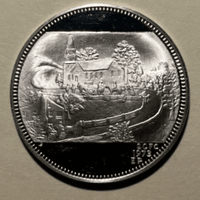
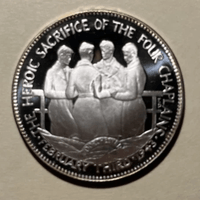
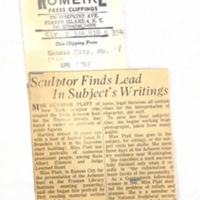
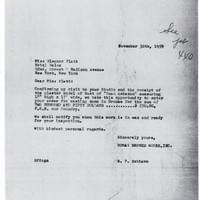
    Eleanor worked both from multiple live sittings, and photographs from multiple angles, sometimes having to use historical photographs of subjects. She also studied her subject's writings to find insight into their intellect and character which was then reflected in their portraits. Most of Eleanor's busts and reliefs were first modeled in clay, and then sent on to the Roman Bronze company in Corona New York, or the Bede-Rassy Foundry in Greenpoint Brooklyn NY, for casting in plaster and bronze (using the lost-wax method), and coloring/finishing. Unfortunately, all of the older production records at the Bede-Rassy Foundry were destroyed in a fire. Records from the Roman Bronze company are archived at the Amon Carter Museum. Some of the bases and pedistals for her busts were produced by the Coopersburg Granite company. All of the marble used for busts and bases was purchased from the Vermont Marble Company. Sculptures of most of her medals and medalions were sent to the Medallic Art Company (MACO) for casting and production. Over the years a number of her works were sent to the Peter A. Juley & Son fine arts photography studio after being cast, where photographs were produced as a service for clients to give out to friends and family. Several busts, reliefs, and medallions were also sent to Peter Juley in their original sculpted clay for photographing. Several of those photographs are featured in the galleries below. There were a few exceptions to these overall processes which are also noted. The Hall of Fame for Great Americans medallions sculpted by Eleanor were distributed by the Coin and Currency Institute, Inc., appointed by the Medallic Art Company as the sole distributor of the Great Americans Series. Many of the Medallic works produced by Eleanor, all bearing portraits, were used as awards of high honor and distinction. Four silver portrait coins were produced by the Franklin Mint for several different coin series.

    Death

    Eleanor was found dead in her studio at the Park Plaza Hotel on West 77th Street in New York City on August 30, 1974. Her death was initially ascribed to heart failure, but it was later determined that she was tragically killed by a man who had murdered at least eight other women, most in the Park Plaza Hotel where he also lived. This became a major story and scandal in New York City as investigative journalists pointed to alleged poor detective work by the NYC police department. Claims were made at the time that many of these murders could have been avoided, including Eleanor's, had proper procedures and leads been followed from earlier murders. Accounts and details of this tragedy may be found elsewhere on the internet. Eleanor was survived by her mother Eva, a sister Florence, and a brother Howard. She was pre-deceased by her brother Lester.

  • Awards and Distinctions

    • Chaloner Prize Three Year Scholarship 1939
    • American Academy of Arts and Letters $1000 Grant 1944
    • Guggenheim Fellowship 1945
    • Mrs. Louis Bennett Prize, National Sculpture Society 1972
    • Fellow National Sculpture Society
    • Member National Academy of Design
    • Who's Who in American Art 1937-1973 (11 various years)
    • Who's Who of American Women
    • Who Was Who 1969, 1976, 1999
    • New York City Art Commission
    • National Commemorative Society

  • Exhibitions

    • 1973 National Sculpture Society panel of medals
    • 1967 F.I.D.E.M. 12th Congress Paris
    • 1965 NSS 32nd Annual Exhibition
    • 1975 F.I.D.E.M. Exhibition 16th Congress Cracow
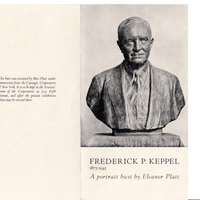
    • Metropolitan Museum of Art ( main hall exhibition of Keppel bust )
    • Guggenheim Museum
    • National Academy of Design
    • National Sculpture Society
    • Pennsylvania Academy of Fine Arts
    • Boston Museum of Fine Arts
    • Hebrew University

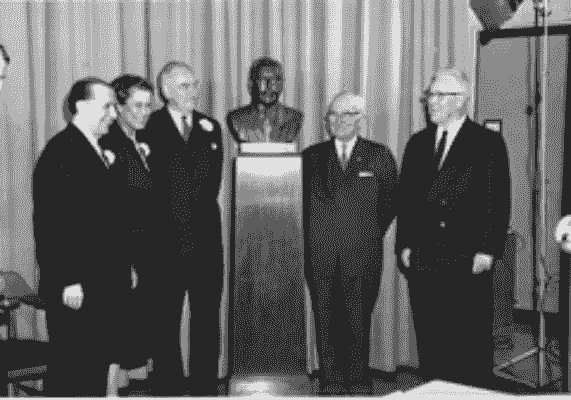
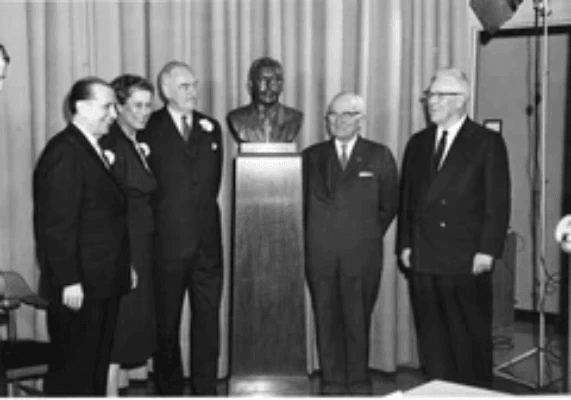
  • Dean Atchenson bust ceremony at Truman Library

    Oscar Chapman, Eleanor Platt, Dean Achenson, Harry Truman, Earl Warren

    Section image

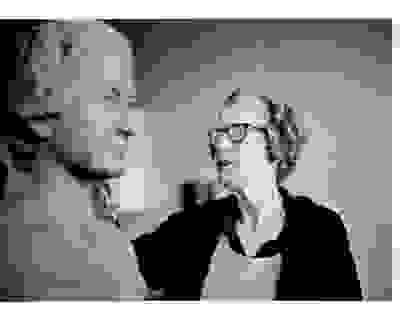
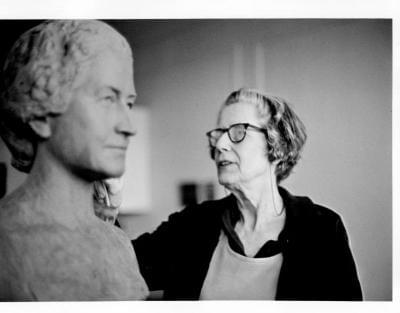
    Sculpting Juliette Gordan Low bust

    Section image

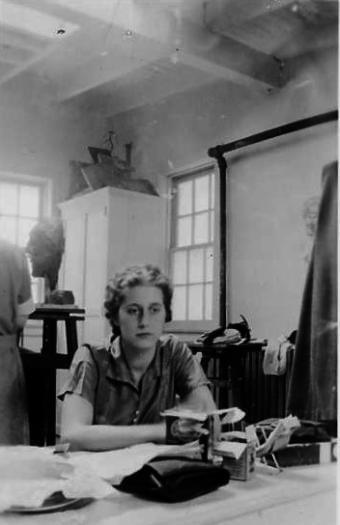
    Art Students League circa 1929-1933

    Section image

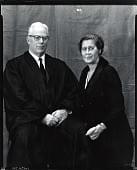
    Portrait with Chief Justice Earl Warren
    Section image

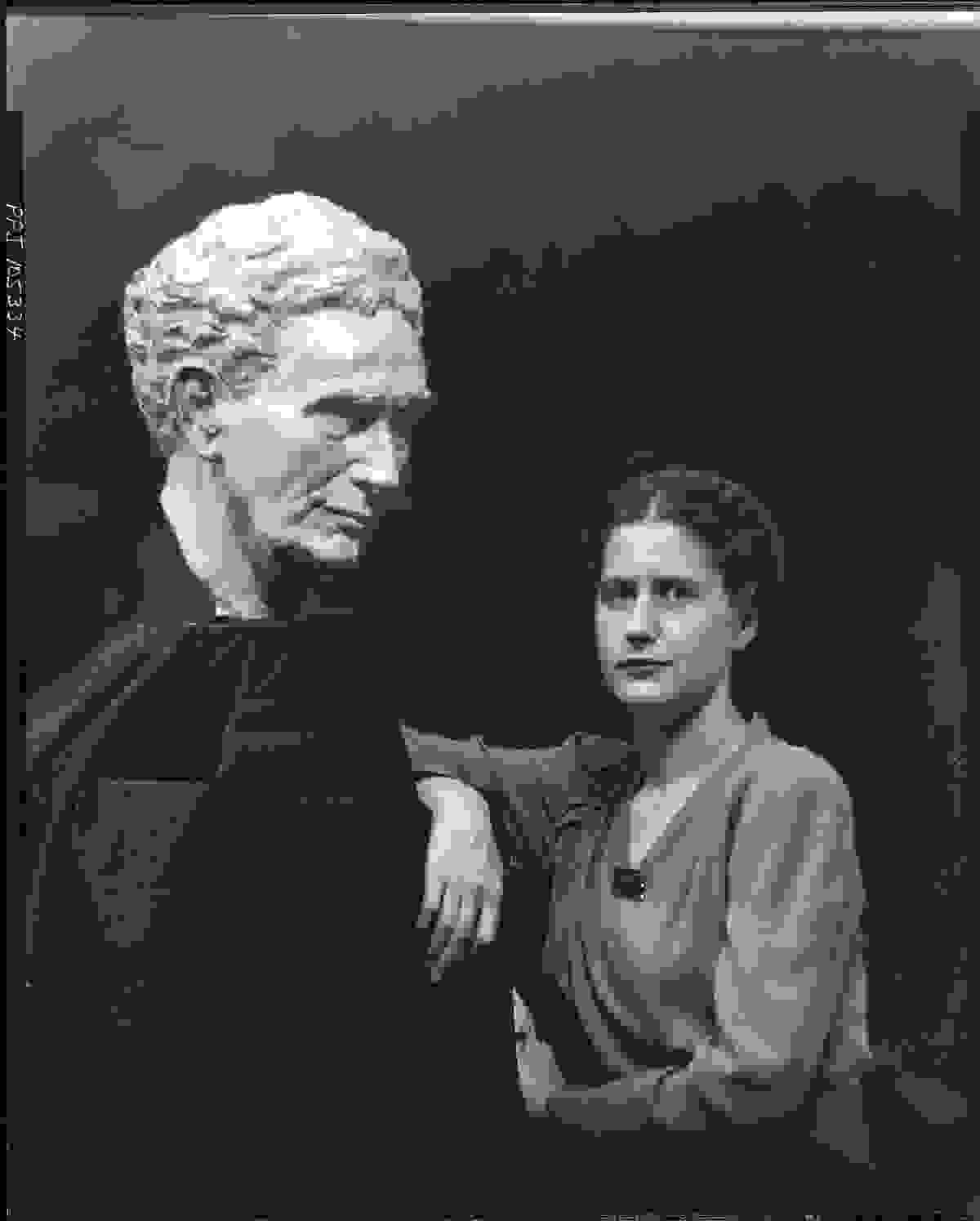
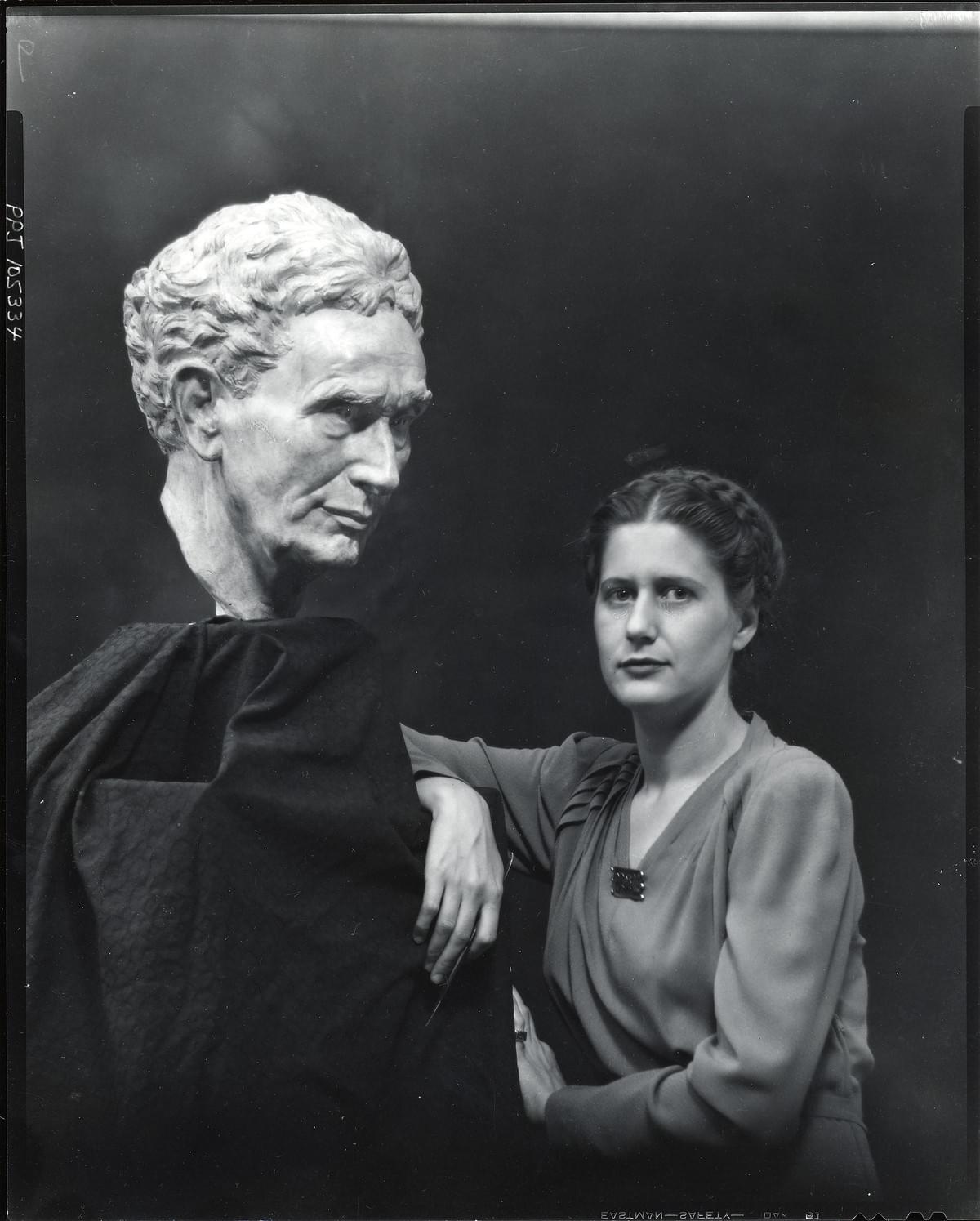
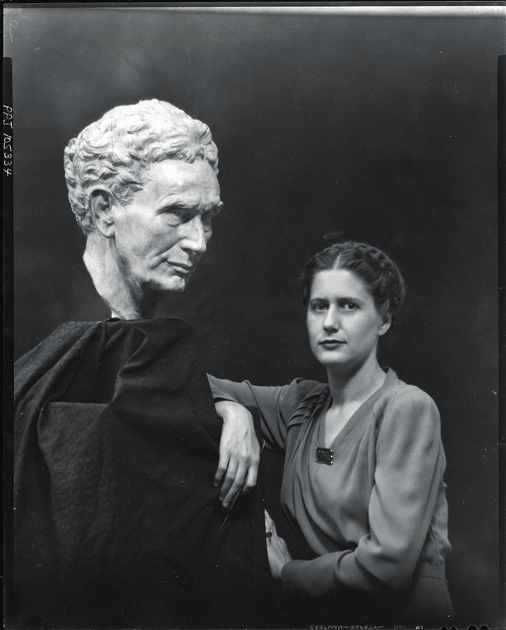
    Portrait with Lewis Brandeis bust

    Section image

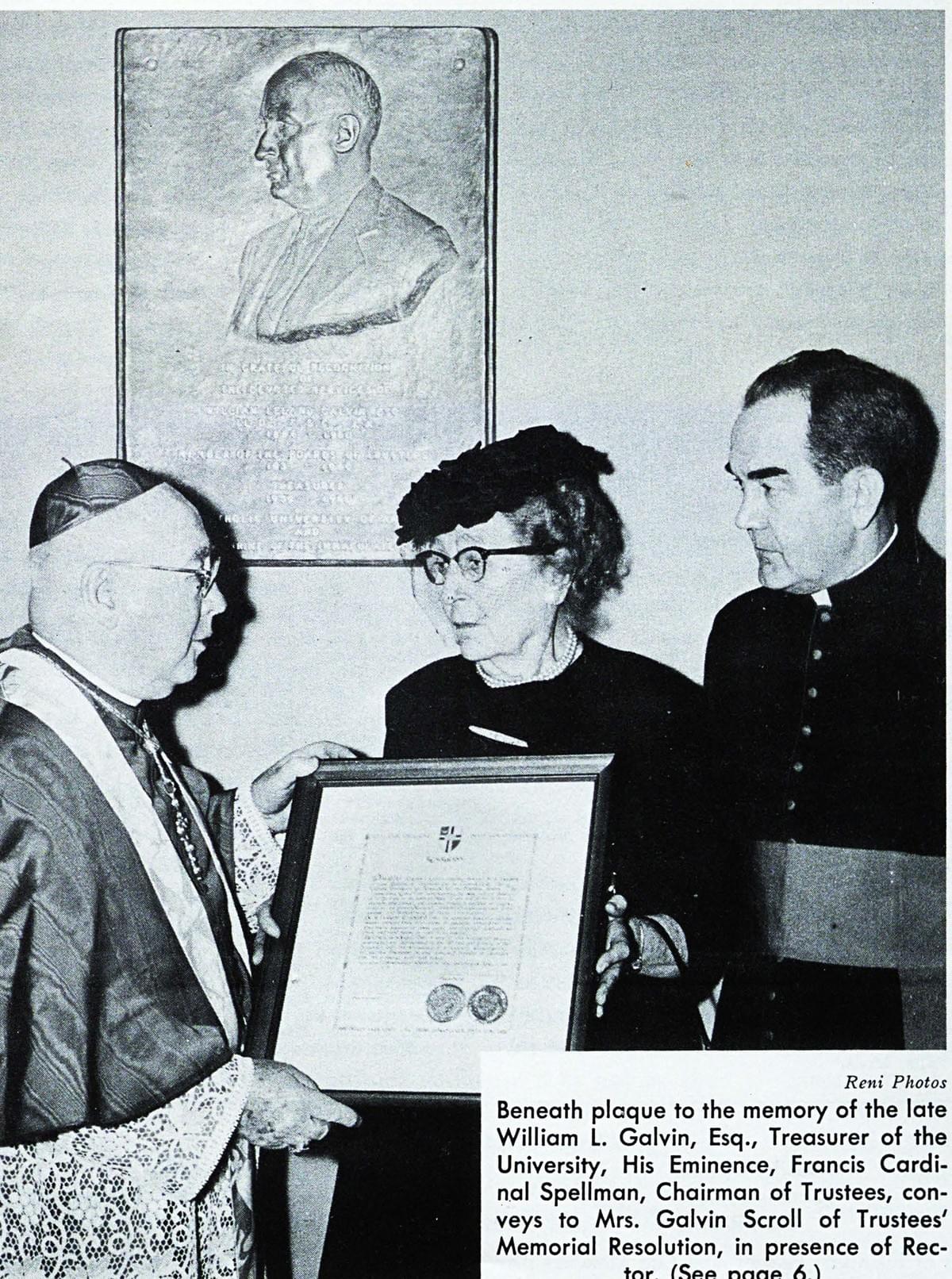
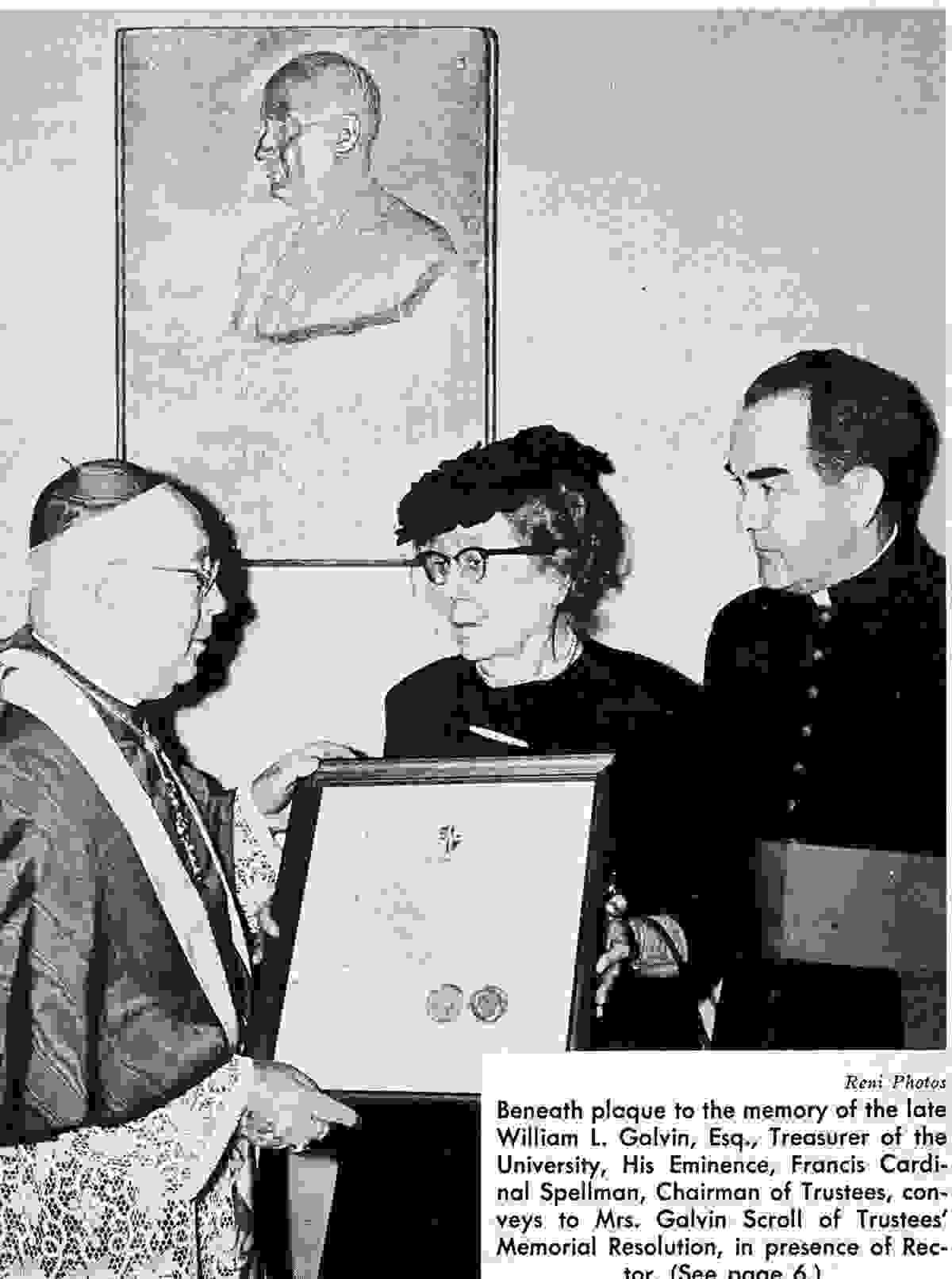
    William Galvin portrait relief presentation at Catholic University
    Section image

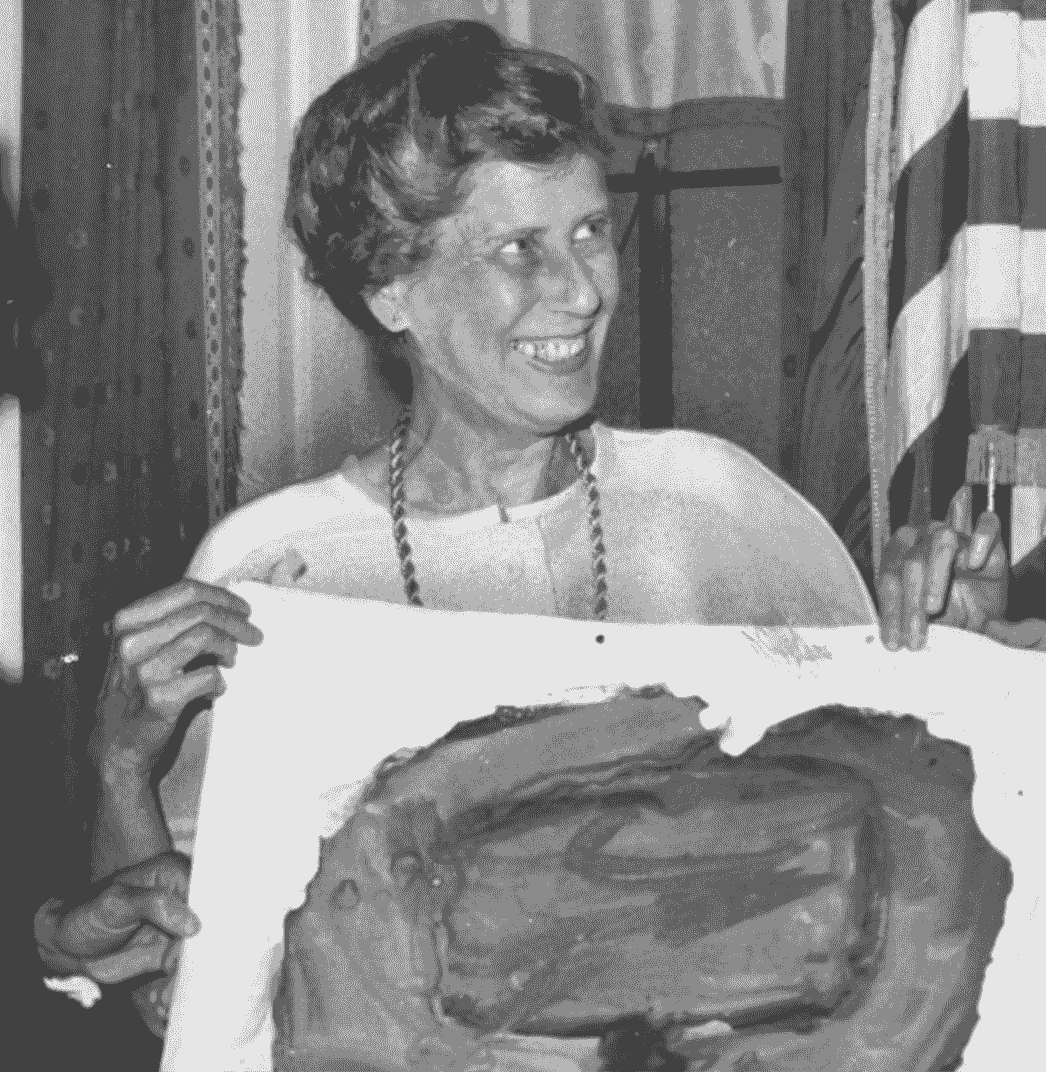
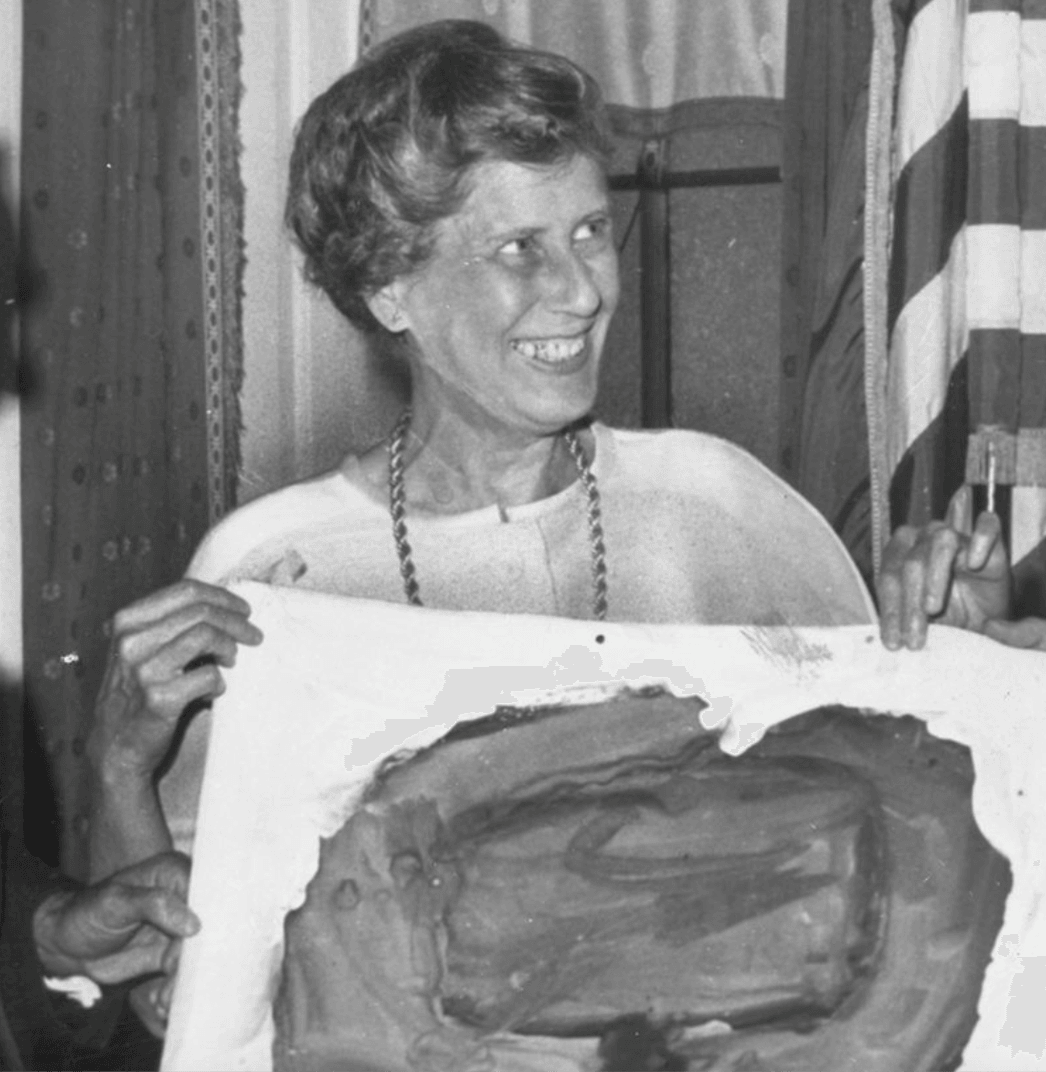
    Presented with a childs painting

    Section image

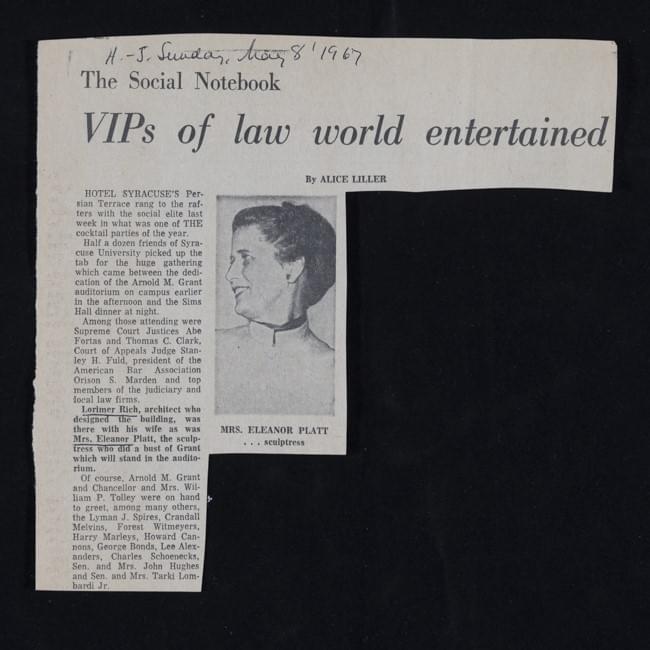
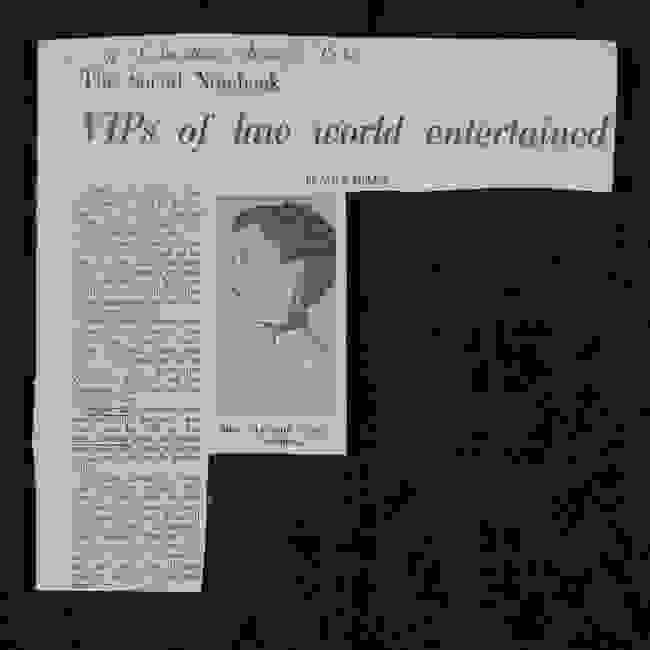
    William Tolley bust presentation article
    Section image

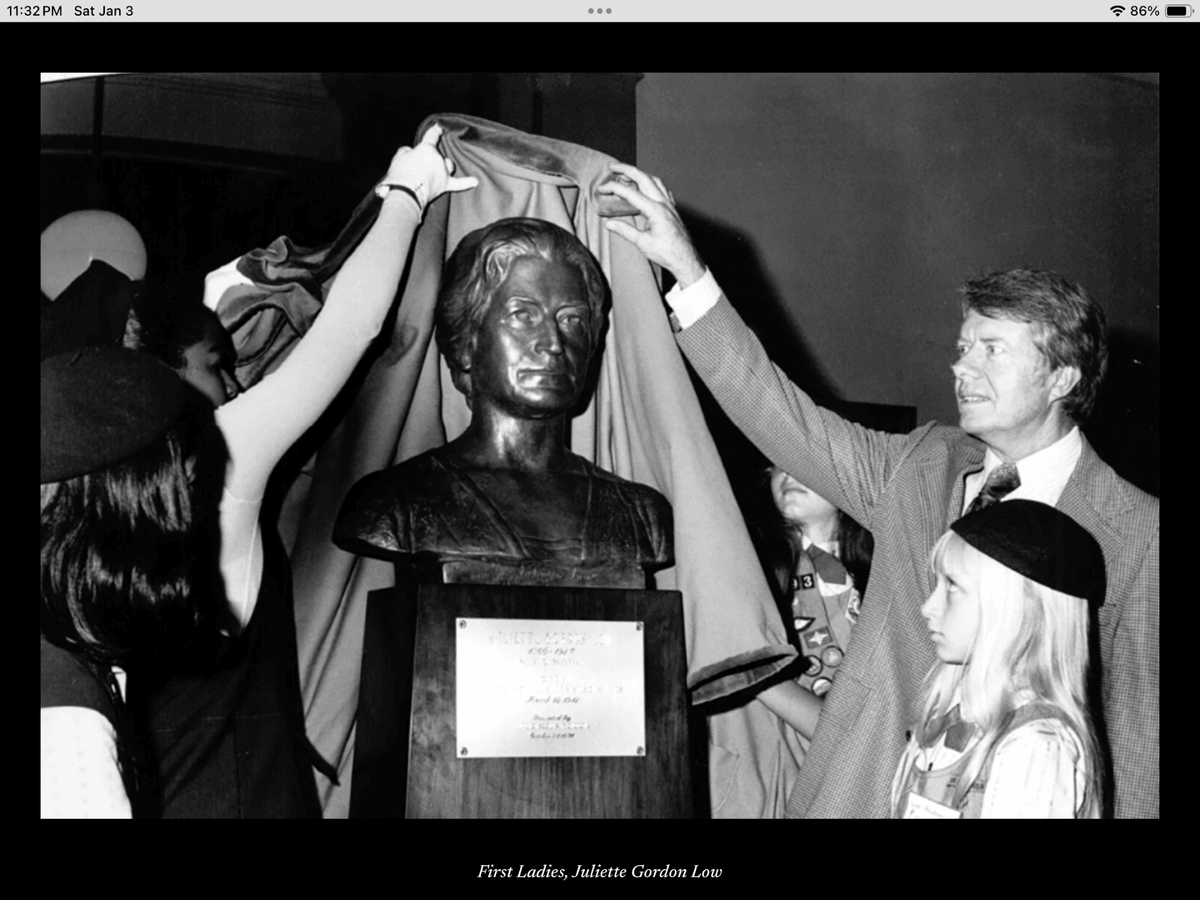
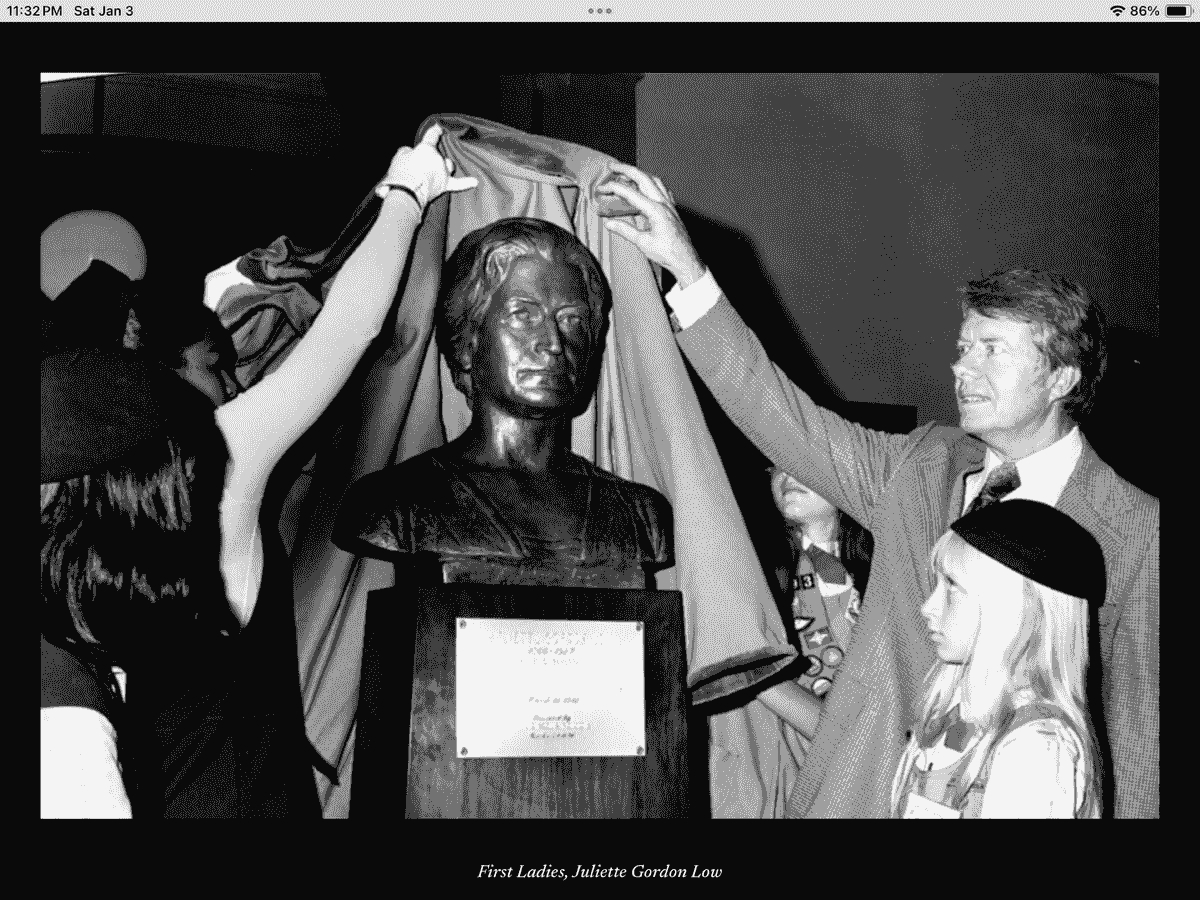
    Governor Jimmy Carter unveils Juliette Gordon Low bust at Georgia State Capital
    Section image

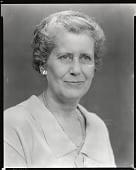
    Portrait early career

    Section image

    Portrait middle career

    Section image

    Portrait late career

    Section image

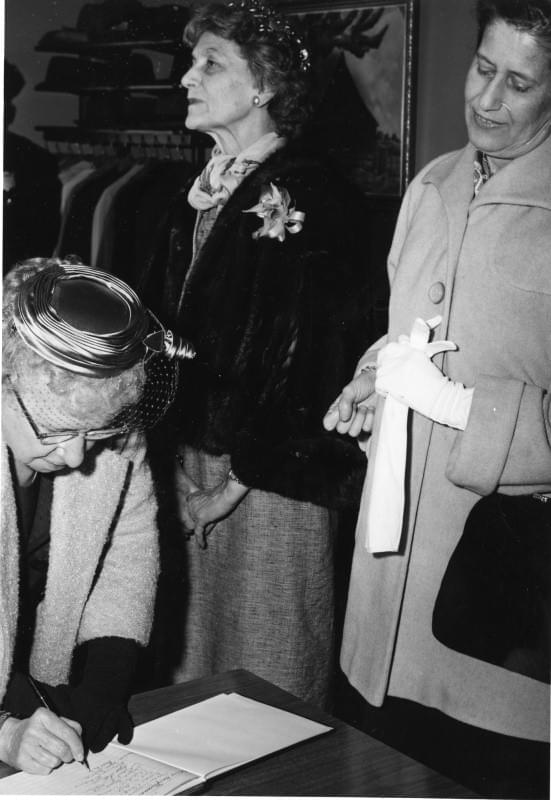
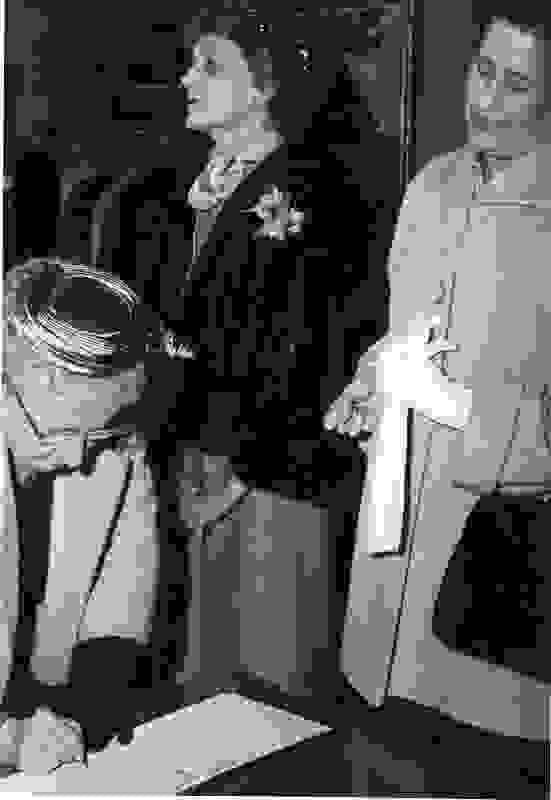
    Bess Truman Signs register with Eleanor and Alice Achenson at Secretary Achenson bust presentation
    Section image

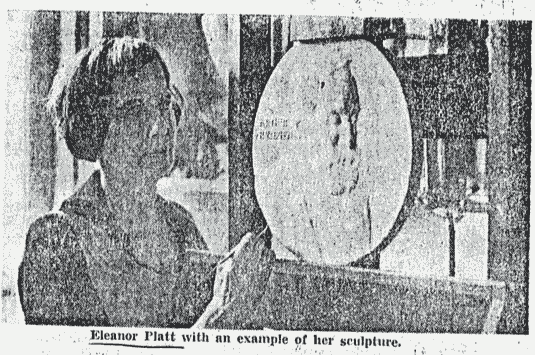
    Eleanor sculpting relief of Arthur Briesen
    Section image

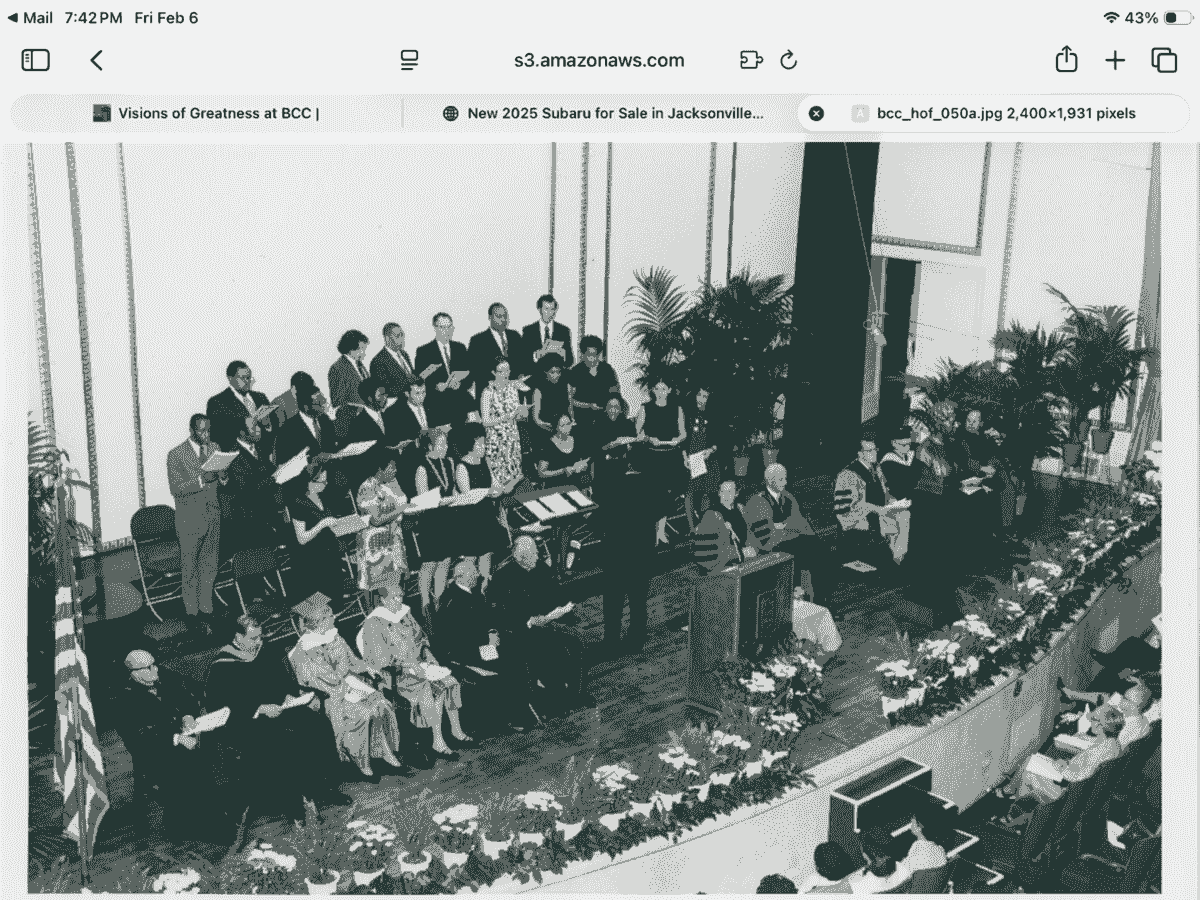
    Lillian Wald Unveiling Ceremony

    Present were the Community Chorus of the Henry Street Settlement

    Eleanor's brother Howard on far left
    Section image

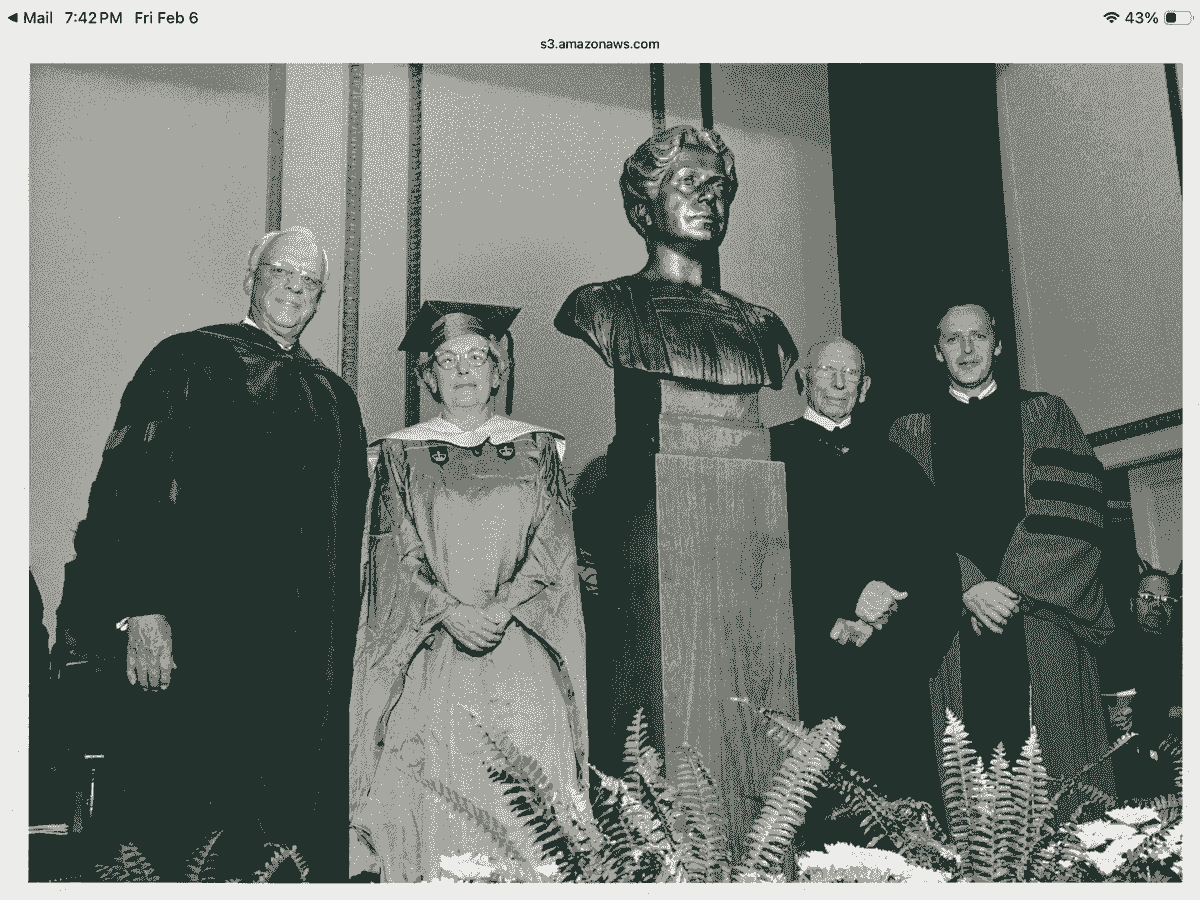
    Lillian Wald Ceremony Hall of Great Americans
    Section image
  • Presidential Medal Story

    The 1973 Inaugural Medal That Never Was

    (acccount condensed from The President's Medal 1789-1977 , 1977, by Neil Macneil)

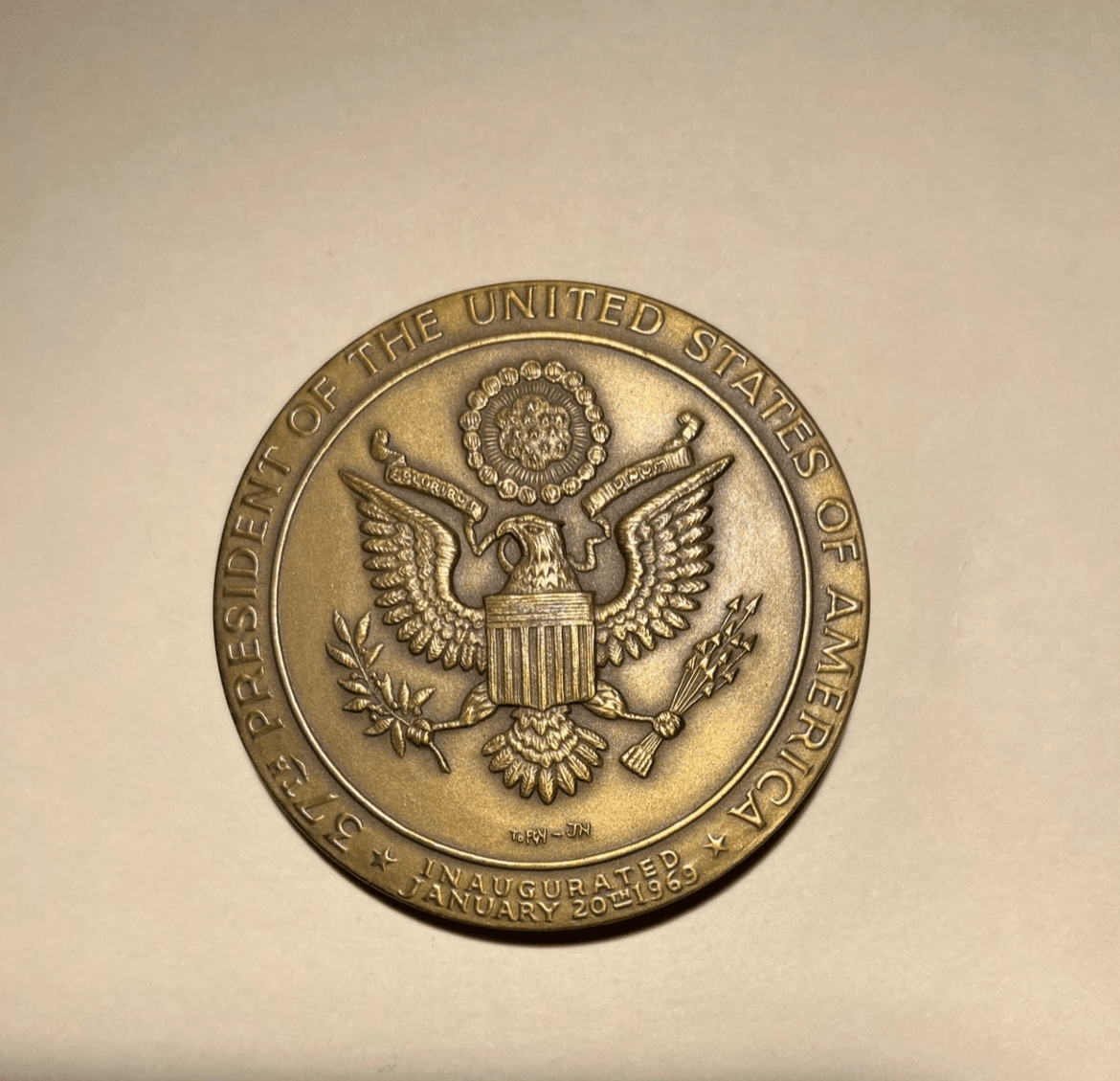
    69.75mm. Bronze. Uncirculated.

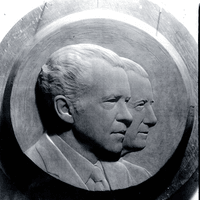
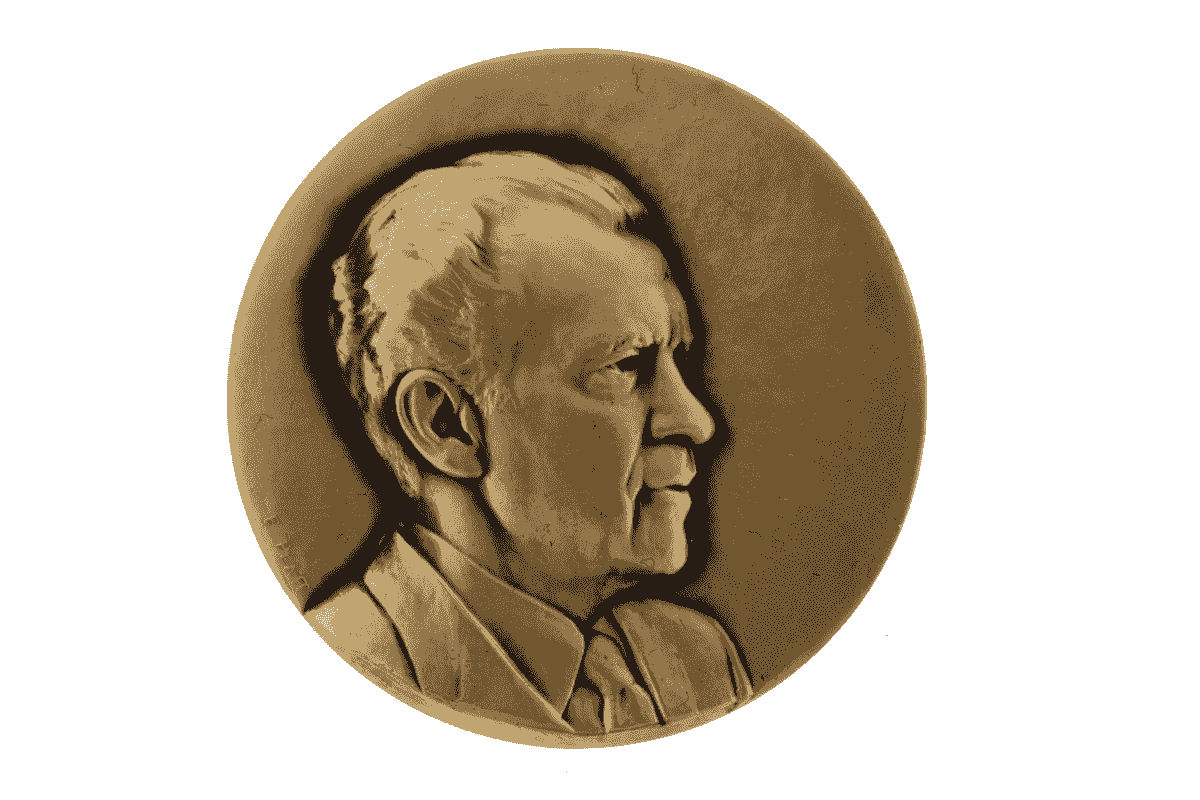
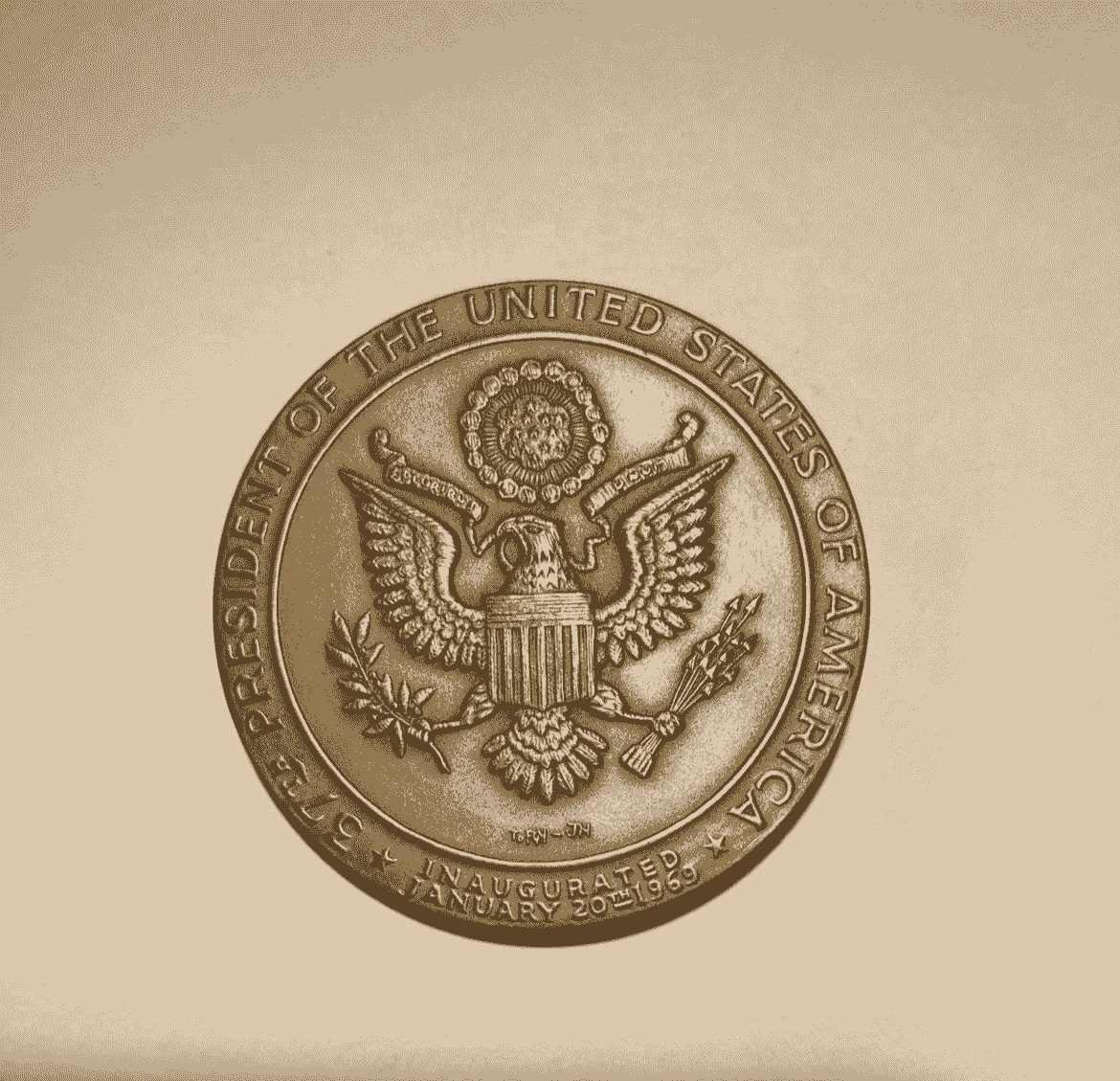
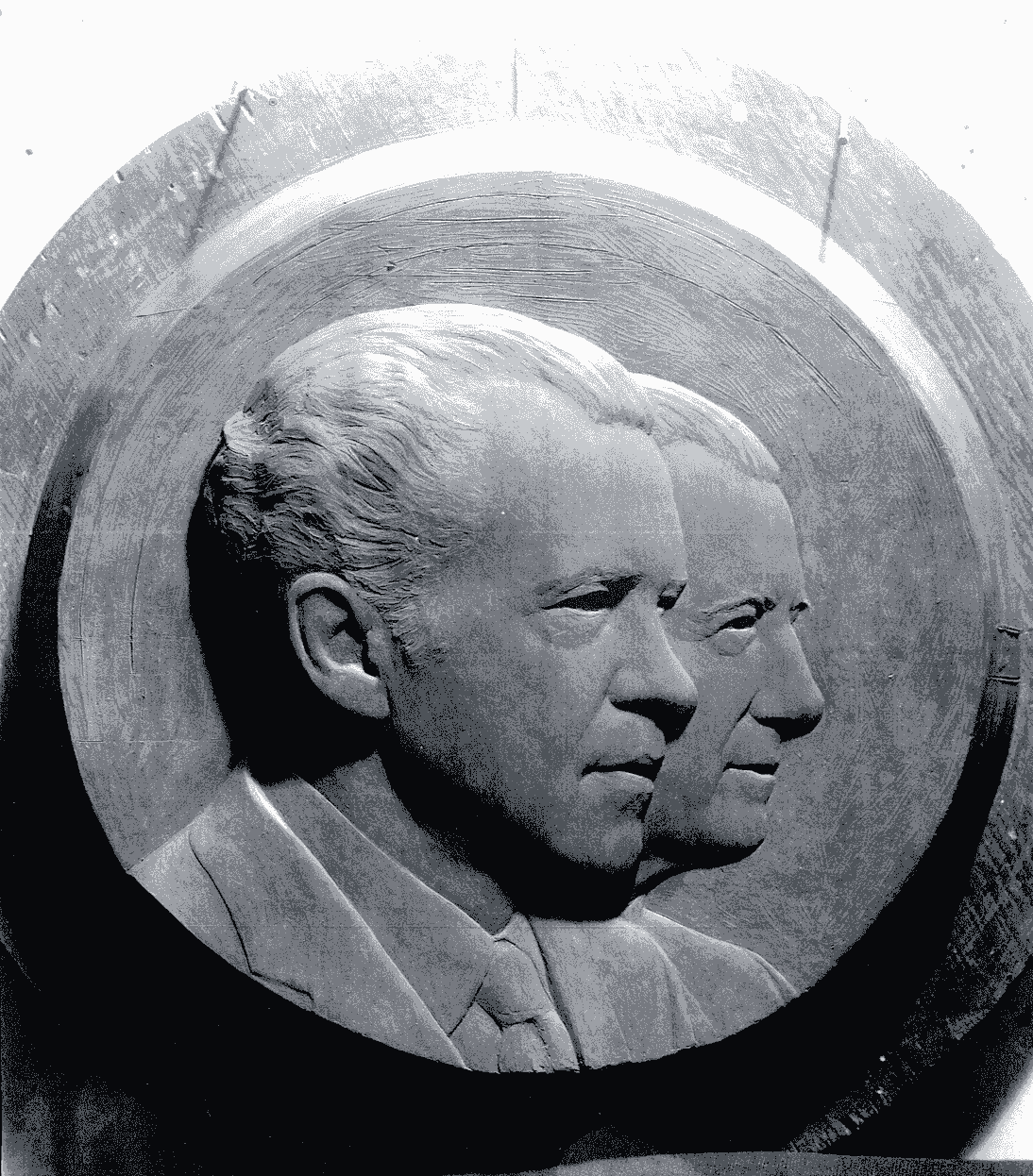
    Sculpted by Eleanor in 1973, the obverse side of this medal bears a portrait of President Nixon to the right in a plain field. The reverse is struck from the very same die that was used for the reverse of the 1969 official medal, sculpted by Ralph Manconi and produced by the Medallic Art Company.

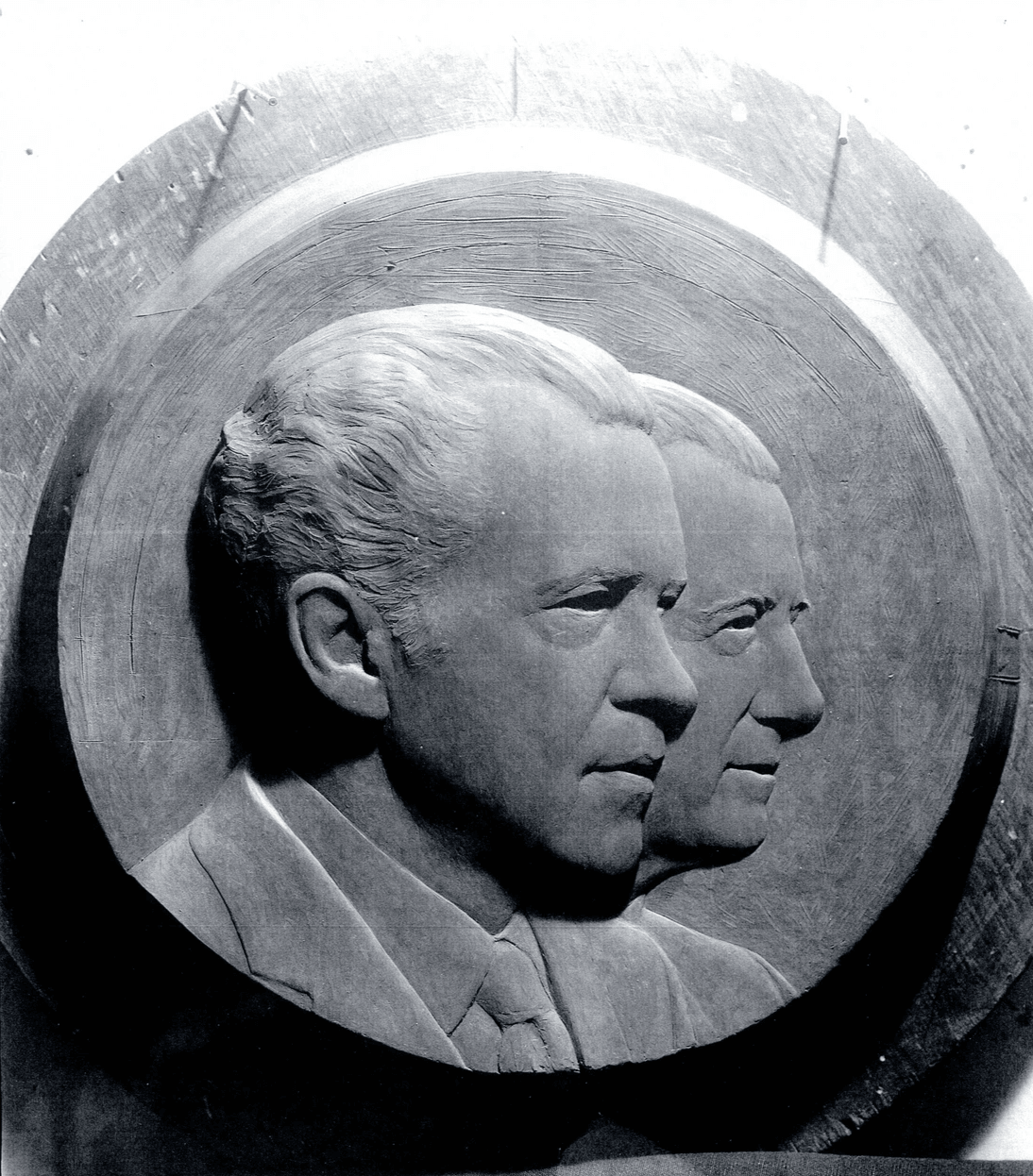
    The Official Inaguaral Medal for 1973 ended up being sculpted by a different artist and struck by the Franklin Mint, which "bought the contract" with an up-front payment of $1 million. This was an offer Medallic Art Company, who contracted with Eleanor, could not begin to match. This was unfortunate as Eleanor's original portrait commission seen below on the right was stunning.

    In preparation for the initial 1973 negociations, MACO commissioned Eleanor to design and model a medal with the traditional second term portraits of Nixon and Agnew. After the contract was awarded instead to the Franklin Mint, MACO officials attempted to salvage something for their efforts. They took Eleanor's model, removed the portrait of Agnew, and reduced the portrait to a die. They then struck a small, but unknown quantity of medals combining this die with the reverse (sculpted by Ralph Manconi) used on the 1969 official medal. An attempt was made to market the medal to the White House as a presentation piece (something President Nixon could give as momentos), with a more appropriate reverse to be made later by Eleanor to the pleasure of the President. This effort failed, and is considered to be one of the most interesting stories in inagural medal history.

    Section image

    Portrait of Nixon sans Agnew

    70 mm Bronze

    Section image

    1969 Inagural reverse sculpted by Manconi used to market the medal to the White House

    Section image

    Rare picture of the original clay model with President Richard Nixon and Vice President Spiro Agnew.

  • Girl Scouts of America

    A fascinating look into Eleanor's work

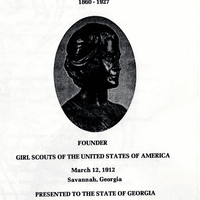
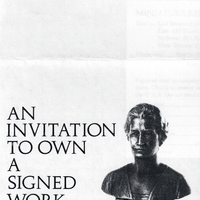
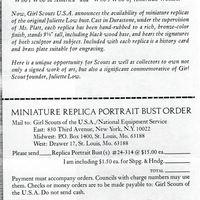
    In 1973 the Girl Scouts of America commissioned Eleanor to sculpt a bust of Juliette Gordon Low, the founder of the Girl Scouts, to be presented to the Georgia State Hall of Fame in the State Capital Building rotunda. Mrs. Low was the second Georgia-born woman to be so honored. A marble bust of Margaret Mitchell , author of "Gone With the Wind", was also sculpted by Eleanor and added to the statues of famous Georgians in the Hall of Fame in 1971. The Juliette Low bust was paid for by the individual donation of nickels, quarters and dollars from more than 50,000 Georgia Girl Scouts and others. The bust was commissioned to be done in bronze with a mahogony base. The Girl Scouts also produced, with the agreement and oversight of Eleanor, a 9.5" replica of the Low bust, cast in durastone, to be sold for $15.00 each as a national fundraiser. Eleanor received a 2% commission on these sales. The reduction of the original bust was done by Karl H Gruppa and the reproductions were produced by Austin Productions, under the direction of Eleanor. One of the replicas is shown in the portrait bust gallery above. As part of her contract, Eleanor agreed to have the national Girl Scout magazine, Girl Scout Leader, send a reporter to do an article about her and the sculpting of the Low bust. Their goal was to present Eleanor as a positive, creative, and independant role model to their thousands of young readers. Below is a copy of the three-part series published in Girl Scout Leader magazine. It is an informative and fascinating look into Eleanor, her work, and the technical art of lost-wax casting. Eight pages and photographs. Courtesy Girl Scouts of America archives.

    Please click on cover below for article

  • Missing Art

    The following sculptures are being researched with the hope that they still exist and can be documented with images. Please contact us below if you have any information about Eleanor, or her works, that might be helpful.

    Self portrait bust, likely only one was cast in bronze. Her name may appear on a marble base.

    Bust of New York City Rabbi, 1954, shipped to one Irving Slokum

    Bust of Thayer Lindsley, Canadian miner

    Bust of Edward or Steven Harkness, 1944, last seen in the Harkness Pavillion Irving Medical Center, NYC

    Bust of Fred Maxwell, founder of Maxwell Gallery NYC

    Possible bust of Philip Brooks, advisor to President Harry Truman

    Possible "Girl on Maypole" 1962 relief cast with Roman Bronze Works

  • About Us

    This website is managed by a member of Eleanor Platt's family. The goal of our website is to commemorate and celebrate Eleanor Platt's work and to inspire current classical sculptors and artists. Thank You to all of the many institutions, museums, universities, archivists, librarians, and persons listed below who have assisted in helping compile historical records, images, and historical facts, without whose help this website would not be possible. Production records for the Roman Bronze Works are housed in the Amon Carter Museum and photgraphic negatives of some of her work is stored at the Smithsonian Institute Peter Juley collection.

    Special thanks to:

    Amon Carter Museum

    Smithsonian Institute

    Harvard University

    Harvard Club

    Harvard Law School Library

    Girl Scouts of America

    Arthur Lee Foundation

    American Numanistic Society

    National Academy of Design

    Eric and Brian Shaffhausen

    Edison and Ford Winter Estates

    Syracuse University Art Museum

    New York City Bar Association

    Art Students League Archives NYC

    Franklin Mint

    Catholic University of America

    New York State Bar Association

    Harry S. Truman Library

    Emerson College

    Bedi-Makky Foundry

    Century Club

  • CONTACT

    Please contact us if you have any questions, comments, or information.

    contact@eleanorplatt.org

    Section image